Wild, Unruly and Beautiful
A good garden should always convey an air of joy
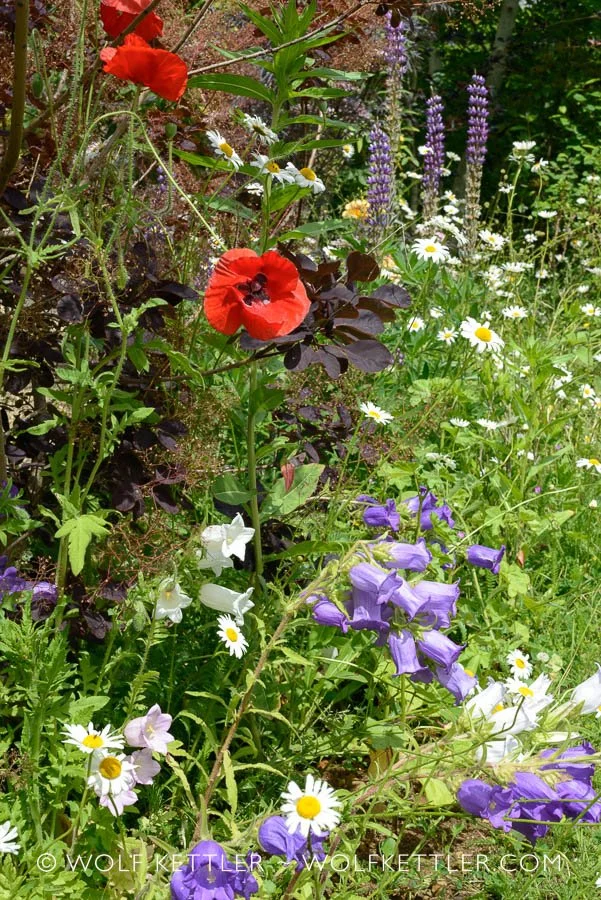
This corner of a border that lines our drive inside the gates does just that. It is one of the last sights when I leave the house and one of the first when I return. It is natural, wild, overflowing, unruly and could not be more beautiful.
The border does not conform to conventional ideas of gardening. I have argued before that the overly tidy garden is the death of nature.
Gardening is an act of creation only within the confines of what nature will allow us to do. We must relinquish the notion of absolute control and accept guidance from the garden and nature herself and welcome wildflowers (sometimes called weeds), which arrive in the garden on the wind and decide to stay. Over time, our garden has become an enchanting collaboration of deliberately placed plants with wildflowers.
"A weed is a plant that has mastered every survival skill except for learning how to grow in rows", Doug Larson (1926 - 2017), the columnist and editor, observed with remarkable clarity.
In this photograph, at a quick glance, I can identify as deliberately placed the Smoke bush, Lupins and Lavatera. I grew the Campanula from seed several years ago, now they are self-sowing. Arrived from elsewhere in the garden and further afield are the Poppies, Marguerites, Evening primroses and several others.
This area is reasonably low maintenance. None of these plants are particularly demanding in terms of growing conditions and water. The insects love it. A major trend at the 2026 RHS Chelsea Flower Show was a focus on wild(er) and (more) natural gardens rather than manicured 'perfection'.
A beautiful paradox
Perfection, in the way in which we understand it, is an artificial (i.e. human-made) and therefore entirely un-natural concept. In nature and in the garden, what we may perceive as imperfect, untidy, messy, uncontrolled and uncontrollable is, in fact, nature's perfection. A beautiful paradox.
By allowing - better still, encouraging - the garden to become wilder, it can become part of the wider ecosystem. Only then will it be truly beautiful and beneficial for the wildlife. Only then will it be beneficial for the planet - and life itself.
Read more about our natural, imperfect garden and see photographs from the garden.