A Natural, Imperfect Garden
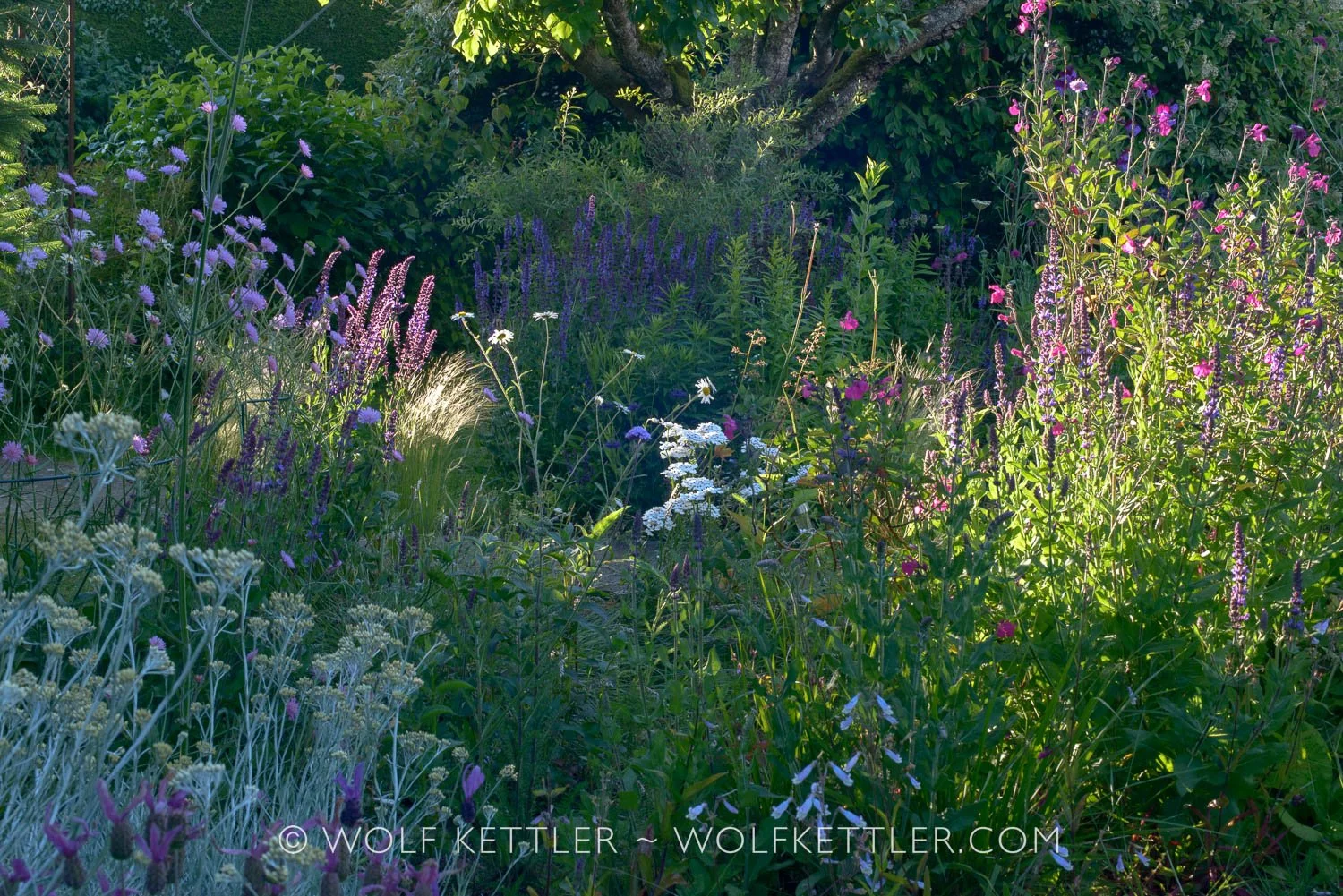
An evening in June in the garden. We are engulfed by nature, not knowing where our bodies end and the plants begin. An overflowing garden is one of those rare win-win situations. It is good for the wildlife, good for nature, good for the climate and good for the gardener's senses and wellbeing.
A space borrowed from nature
Our garden is a private, domestic garden in Wiltshire, England. The wabi sabi principles of embracing the natural, the imperfect and the impermanent are important characteristics. Although, the wabi sabi connection was not a part of the original idea but followed from these reflections - I only discovered it after I had started to garden.
The garden is a biodiverse and to a large part beautifully secluded space, which features perennials borders, ornamental grasses, a stumpery, wildlife pond and folly, wildflower mounds, a circular grass meadow with spring bulbs, a vegetable garden and more.
We "owned" the garden long before I became a gardener. I believe that the garden does not belong to me but is borrowed from nature and the wildlife. My duty as a gardener and resident of this planet is to work with nature, not against it, to put nature before my own demands and to consider its requirements before making alterations.
This incarnation of the garden is a living and ever evolving project, which started only in 2017. From the beginning I knew that I wanted a garden that was beneficial for the wildlife, overflowing with plants and a joyful refuge for the human residents.
The garden has taught me humbleness
I am not the great controller but the caretaker at best. Gardening is an act of creation only within the confines of what nature will allow us to do. Of course, sometimes you can do things very purposefully without knowing it.
The natural garden
The term natural is an indispensable part of wabi sabi theories. It means that we relinquish the notion of control in favour of welcoming guidance from the garden and nature herself. Only then can we hope to achieve something truly beautiful.
Natural also means that we welcome wildflowers (some people call them weeds), which arrive in the garden on the wind and decide to stay. In truth - and I know that this is a sentimental notion - I feel honoured and blessed that they should choose our garden. I realised years ago, at an early stage in my gardening, that you can only ever hope to gently manage weeds. It is not a case of eradicating everything that was not deliberately placed but welcoming new arrivals and making sure that everything has the space to thrive. If you try to fight them, you are going to lose unless you resort to herbicides (but why would anyone in their right mind want to poison nature?) or concrete over the entire garden, lay plastic “lawn” and plant plastic trees (what horror!).
Let us accept weeds for what they are, beautiful and useful plants. Many flower alluringly for a long time and are immensely beneficial for the wildlife. They help to move towards a state of equilibrium, which has long been lost in many gardens.
As an artist, I am interested in how this relinquishing of the notion of control can inform an artist's work.
The tide on gardening may finally be changing. I have been noticing that increasingly more people are becoming interested in wilder, natural gardens. At the 2026 RHS Chelsea Flower Show, a major trend was weeds being rebranded as hero plants, celebrating wild and natural ecosystems rather than manicured 'perfection'. As I have said many times before, perfection, in the way in which we understand it, is an artificial (i.e. human-made) and therefore un-natural concept.
Our garden means many things to me: A space for caring for the wildlife and nature, to be grateful, to reflect on one’s place on this earth, somewhere to nurture my mind and body and a place to recharge my creativity.
The garden is also the exclusive location for my book An Imperfect Garden and my nature studio for portrait photography.
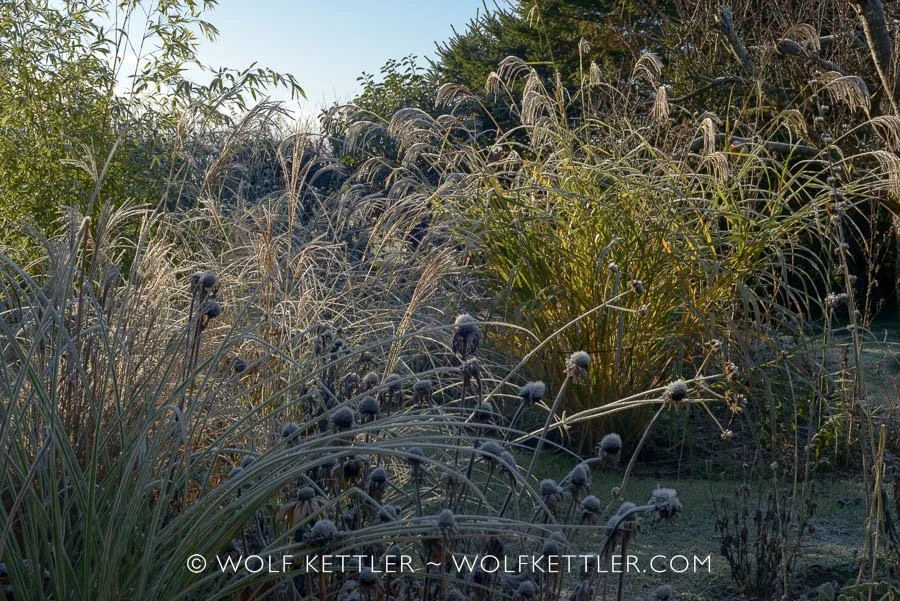
Photographs from the Garden
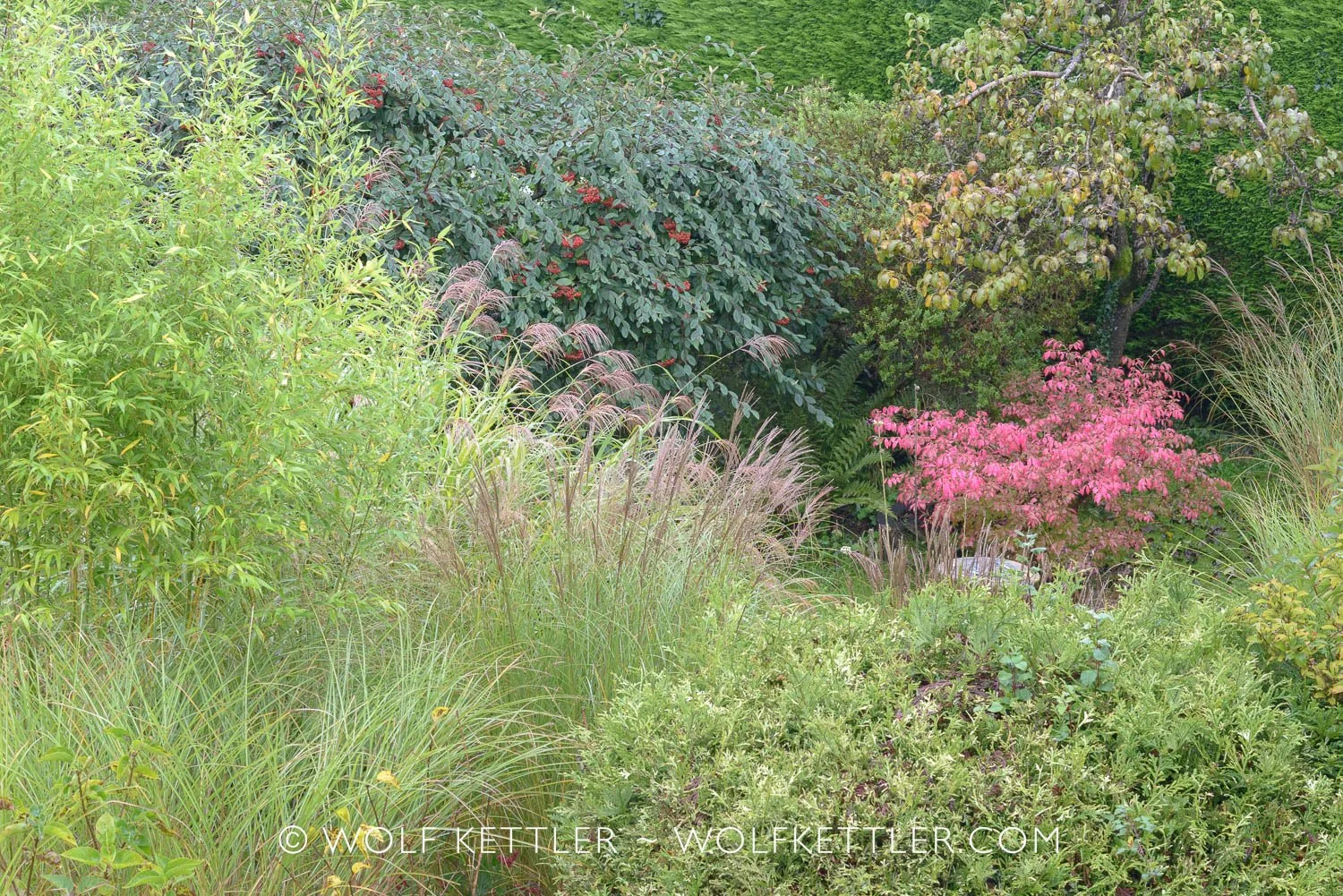
Photographs from the artist’s natural, imperfect garden.
An Imperfect Garden - The Book
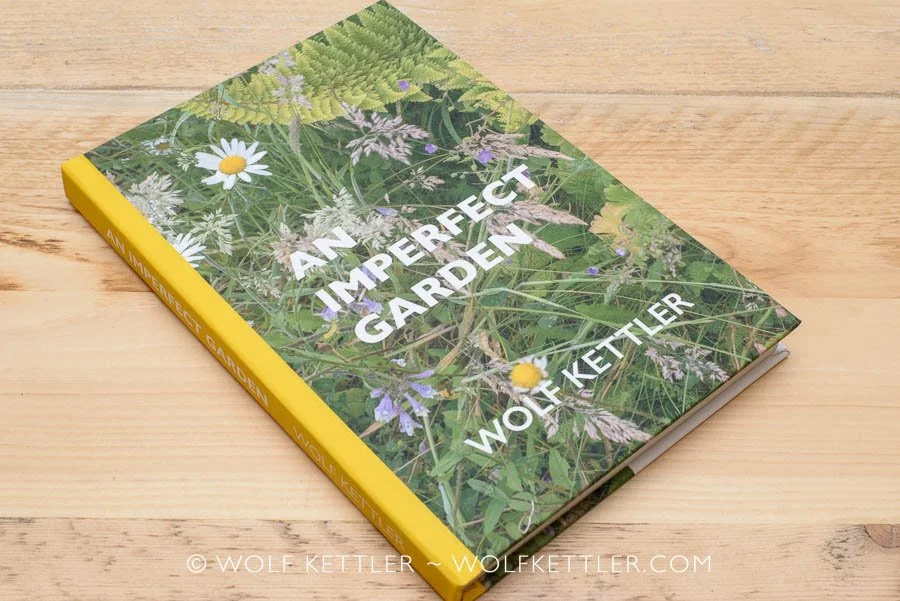
Delve deeper into the philosophy of a natural, imperfect garden.