Discover Spring in the Garden
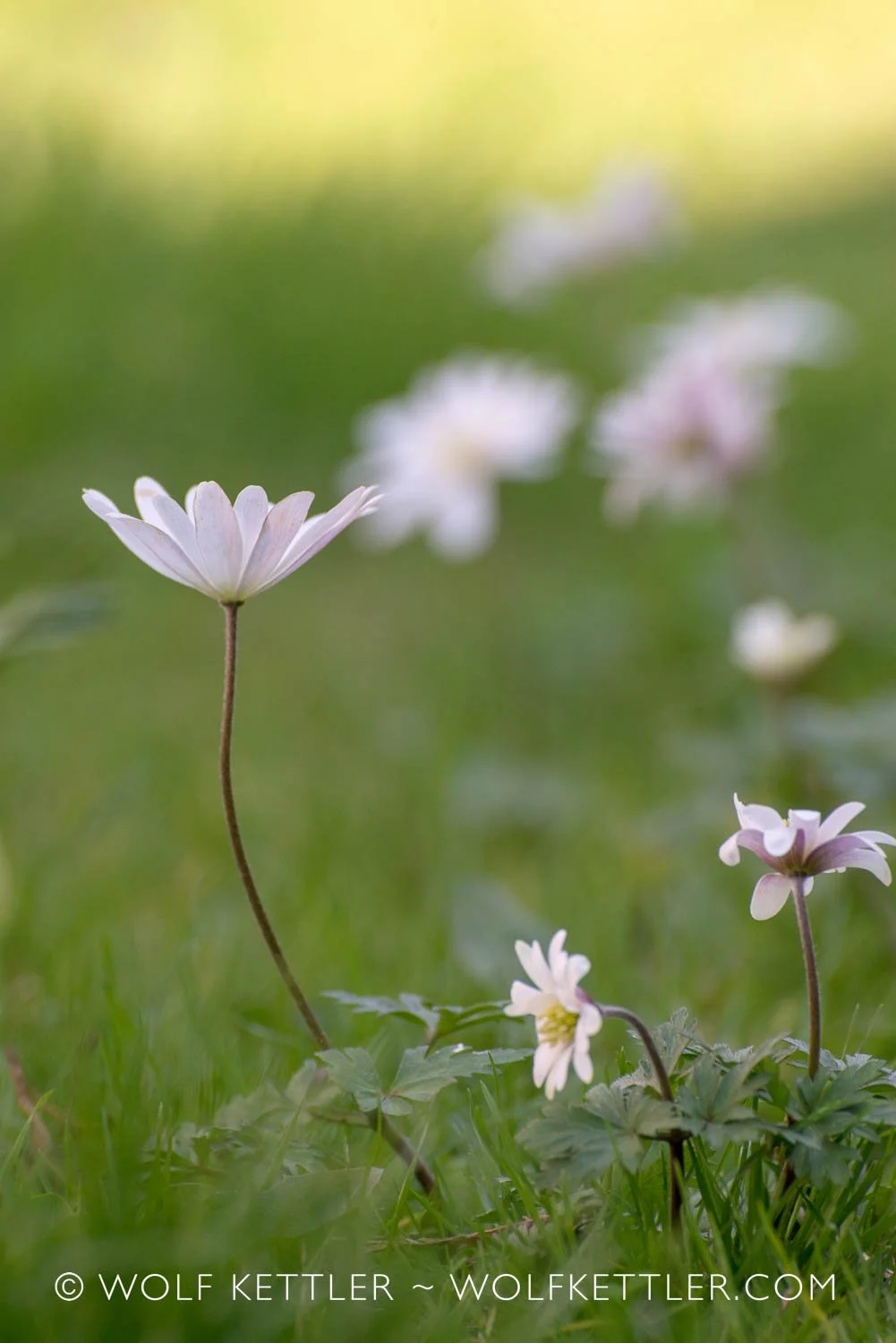
In the meteorological calendar, spring is March to May.
Early to mid spring, March and April, is the most difficult time for me in the garden. I cut down the old year’s growth usually around April, possibly beginning in late March. The garden suddenly looks bare and empty. Despite the beautiful new growth and flowering going on already, there is still so much bare ground visible and the height and fullness of later months are still missing. I anxiously await the arrival of every new leaf and flower. And yet, there is so much happening so quickly that it is difficult to keep up with the daily developments.
This is also the time when I weed the borders. I am not trying to eradicate the weeds - which would be impossible and in any case foolish and irresponsible. After all, they are beautiful and useful wildflowers - but to create balance so that every plant has the space and light it needs. I tend to plant fairly close, which suppresses weeds but for the perennials to grow, they must not be swamped by weeds at this time of the year.
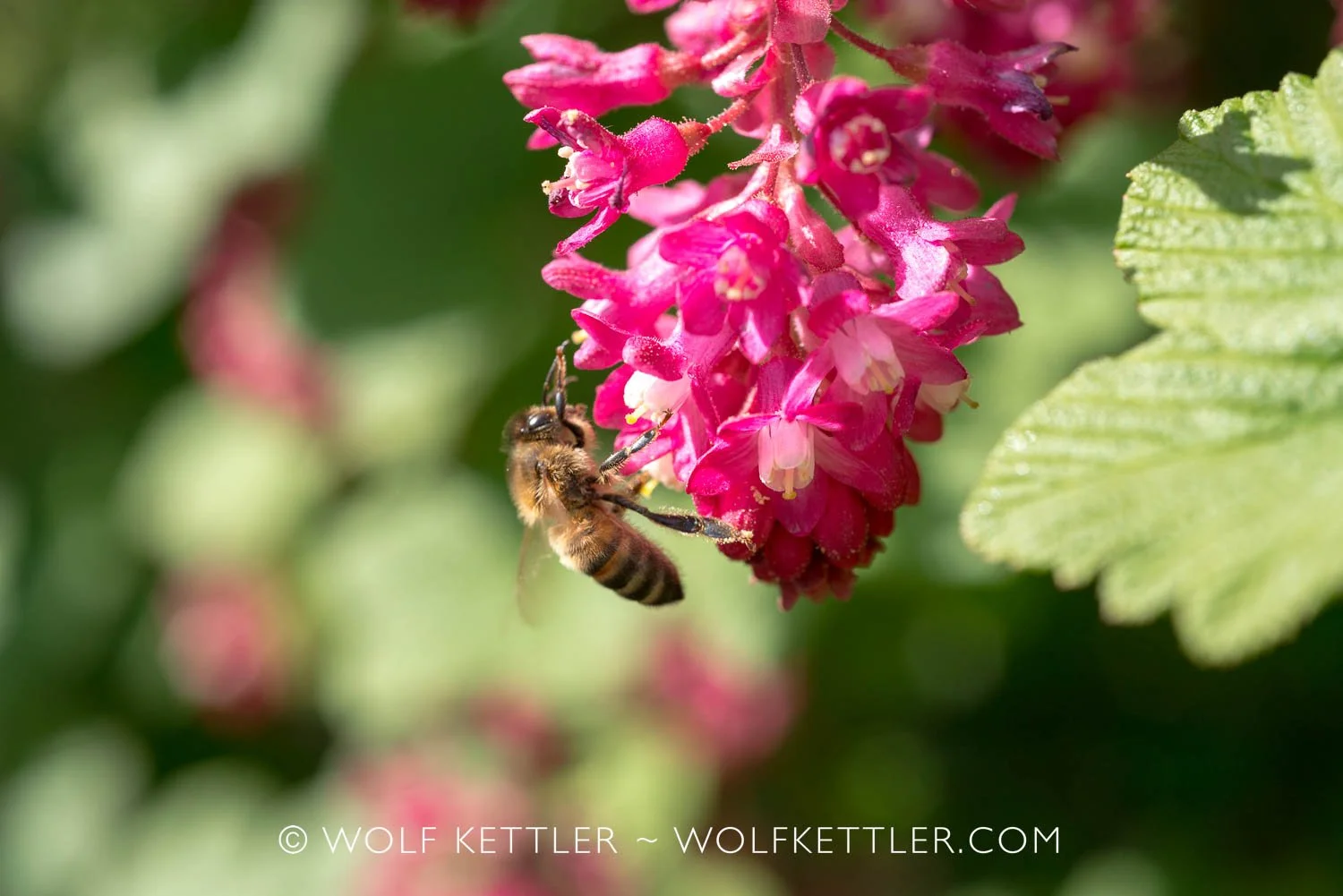
The bees and other insects are grateful for all early flowering plants, starting with the primroses and bulbs, but especially such favoured ones as the Flowering currant, which they adore.
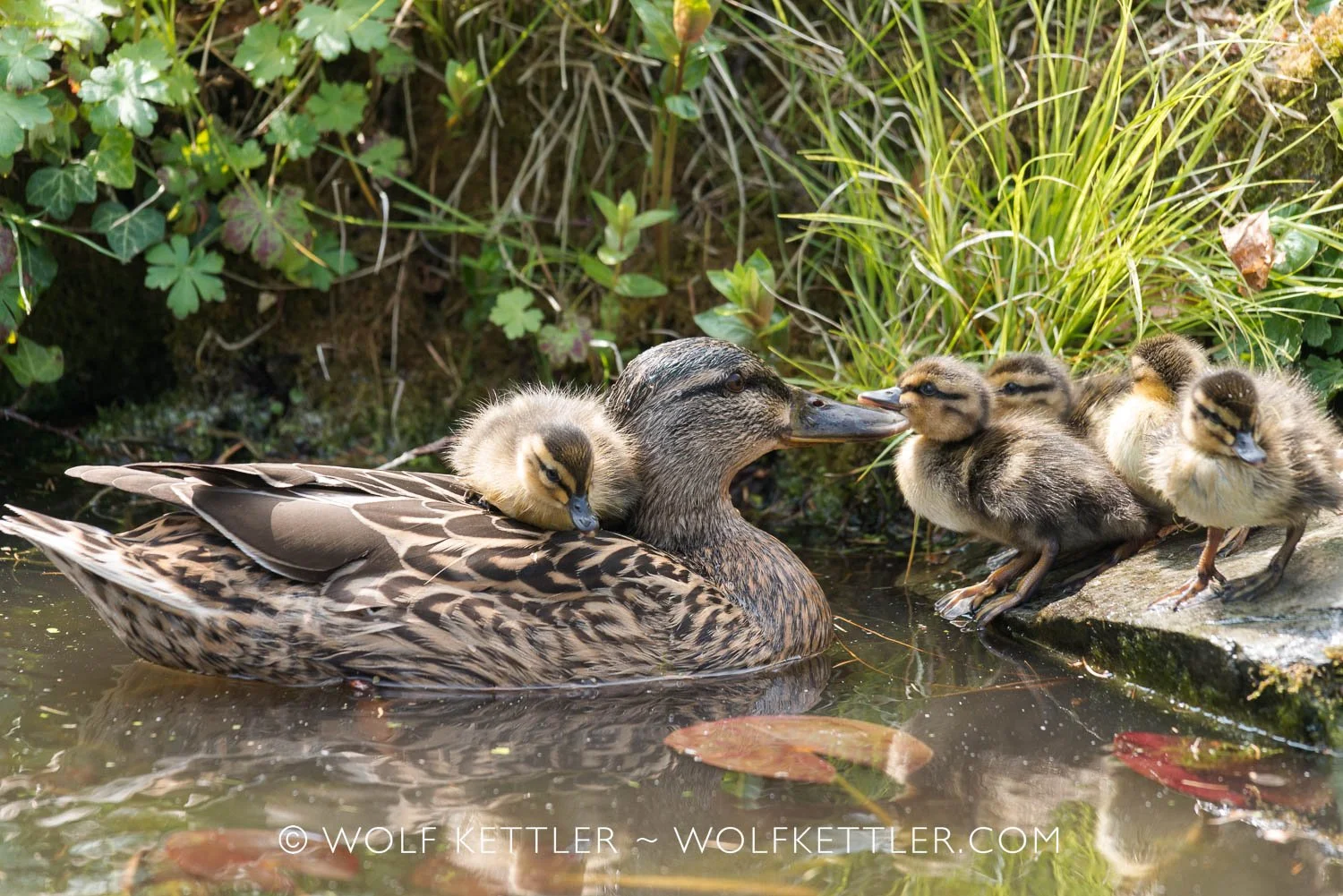
Spring is all about new life. April and May in particular are busy months for the birds in the garden. Their eggs have hatched and the little ones are fledging. We are privileged to often have nesting ducks in the garden although we can never be sure whether and when exactly they will come back the following year. It is a tense time for us, too, because there are many dangers that they have to face.
Feeding the birds has become more complicated. We know that feeders can spread disease. Still, feeding the birds on regularly cleaned feeders at this time of the year does help. The adults will still feed their offspring the proper food but they are grateful for fast food of the healthy variety for themselves.
By May, the garden is at last becoming more lush if still not overflowing. By the middle of the month, after the risk of late frosts, the vegetable garden gets busy. The first herbs can be harvested in quantity for drying.